
Resources
If you have just been diagnosed, or you are worried about a symptom, this page is where to start. It is a signpost, not a substitute for your medical team — but everything here is something we would tell a friend.
Metastatic Breast Cancer Infographics
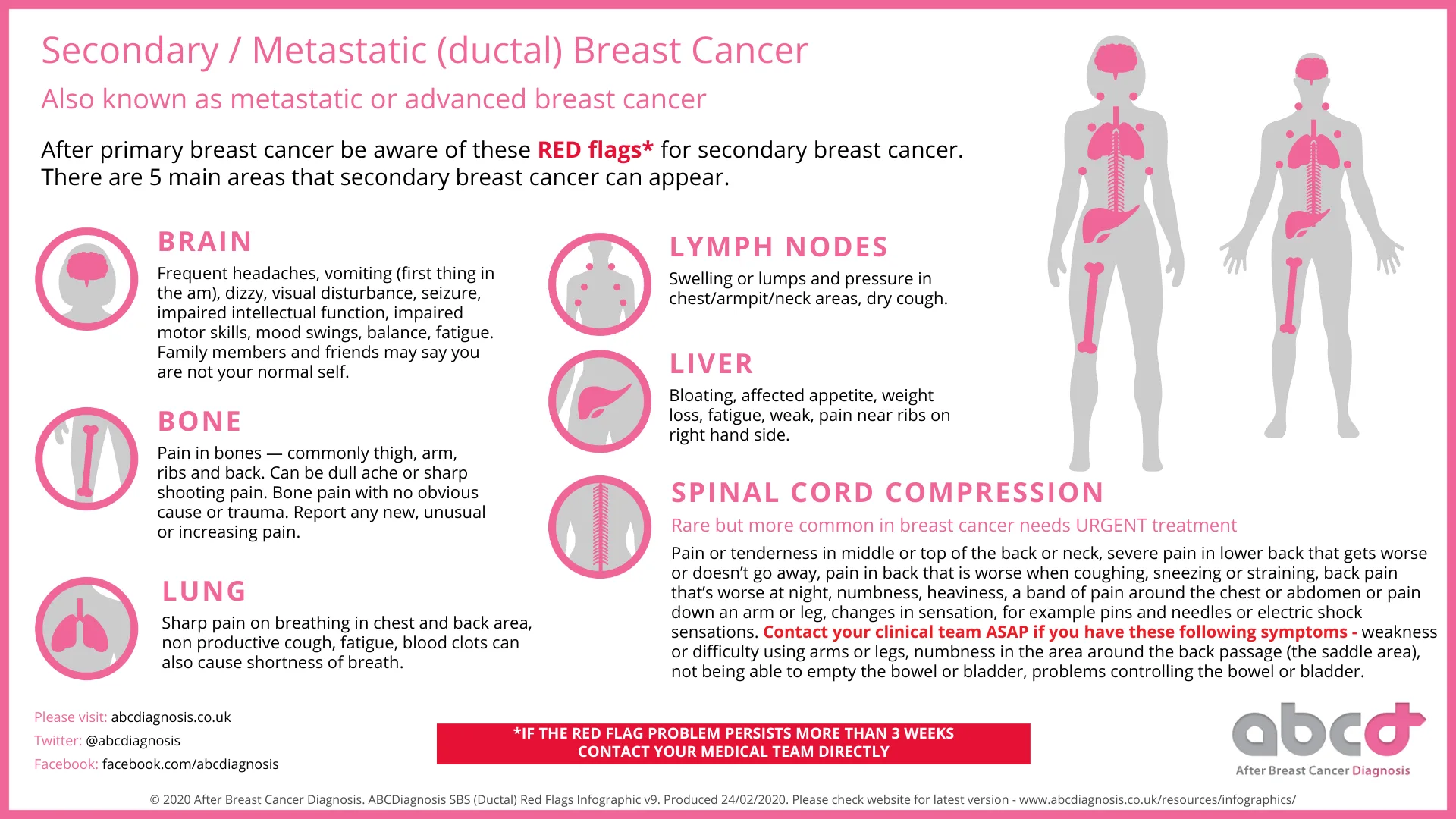
Ductal Red Flag Infographics
Lobular Red Flag Infographics
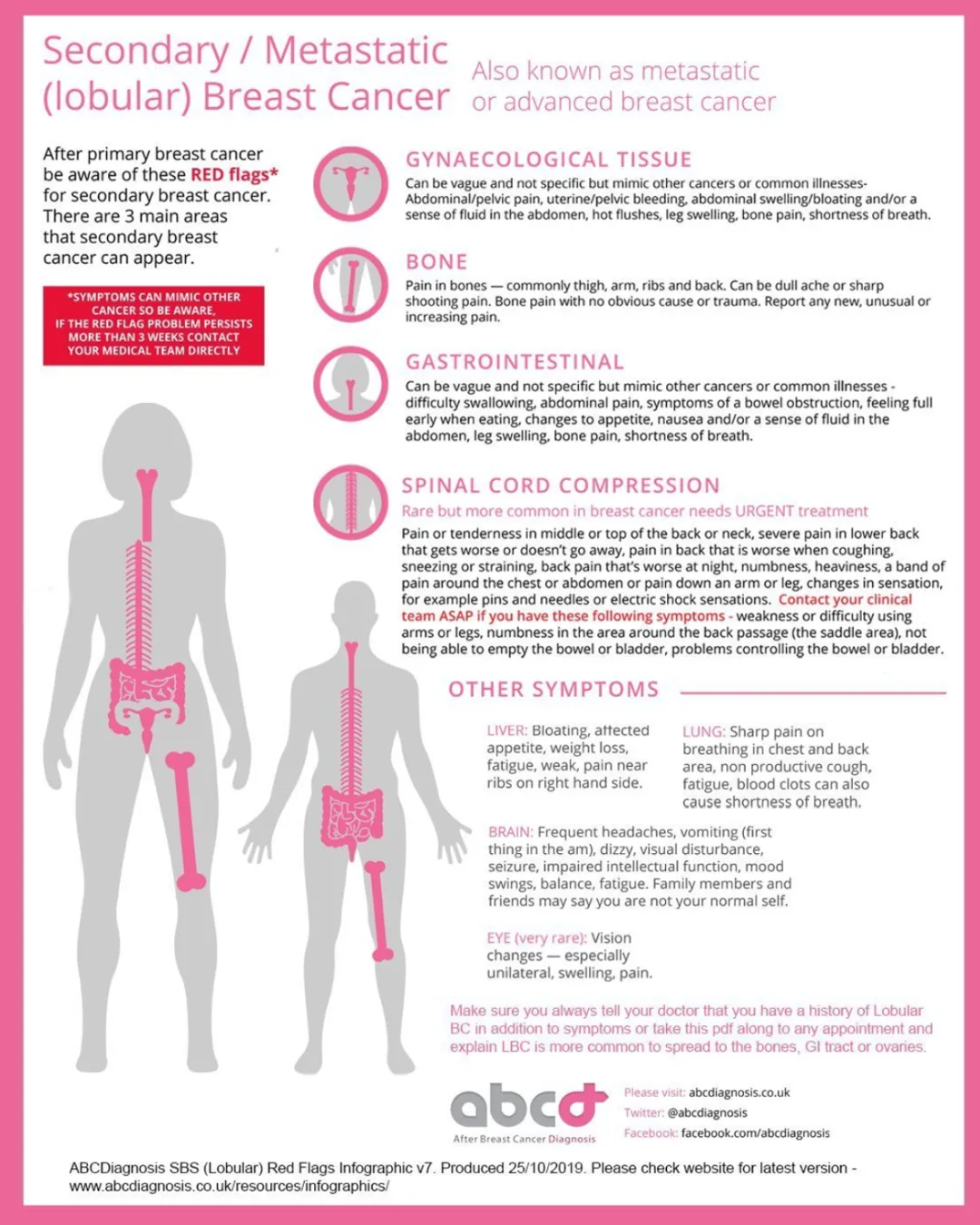
If you are worried about a symptom
The red flag infographics above set out where secondary breast cancer most often spreads — bone, lung, liver, brain, lymph nodes, and spinal cord compression — and what it can feel like.
If a symptom has lasted more than three weeks, contact your medical team. You do not need to wait for your next appointment, and you do not need to be certain it is something. Ask to be seen.
There is more on the infographics, and how to use them, on our red flag infographic page.
If you have just been diagnosed
A secondary diagnosis is not the same conversation as a primary one, and a lot of the information you will find online is written for primary breast cancer. These are the places we send people first:
- Breast Cancer Now — a nurse helpline, and a Living with Secondary Breast Cancer service that runs monthly meet-ups across the UK and online.
- Macmillan Cancer Support — practical and financial help, including benefits advice and help with work.
- Secondary1st — a UK charity funding research specifically into secondary breast cancer.
- ABC Diagnosis — our founder Jo Taylor's site, where the red flag infographics began.
You can also join us. Most of our members came to METUPUK in the months after their own diagnosis.
Treatment and drug access
Whether a drug is available to you depends on where you live in the UK and on decisions made by bodies most people have never heard of until they need one.
- NICE — decides which treatments the NHS in England funds, and publishes its reasoning. The Scottish Medicines Consortium does the same for Scotland.
- Our own coverage — we have written about most of the major decisions as they happened, including Trodelvy, Enhertu and tucatinib. Start at research and trials, or browse the drug approval and treatment options topics.
If a treatment you need is not funded where you live, that is something we campaign on. Tell us.
Clinical trials
- Be Part of Research — the NIHR's search for trials recruiting in the UK. You can search by condition and location.
- Cancer Research UK — a trials database written for patients rather than clinicians.
Ask your oncologist about trials even if they have not raised it. Our clinical trial posts include members writing about what taking part was actually like.
Campaign with us
METUPUK is the only patient advocacy group in the UK campaigning solely on metastatic breast cancer. We are volunteer-led and patient-led.
- Write to your MP — we will help you with what to say.
- The Darker Side of Pink — the exhibition, and the 31 women whose portraits carry it.
- How you can help — including if you do not have breast cancer yourself.
Something missing, or a link that no longer works? Tell us and we will fix it. This page is only useful if it is right.